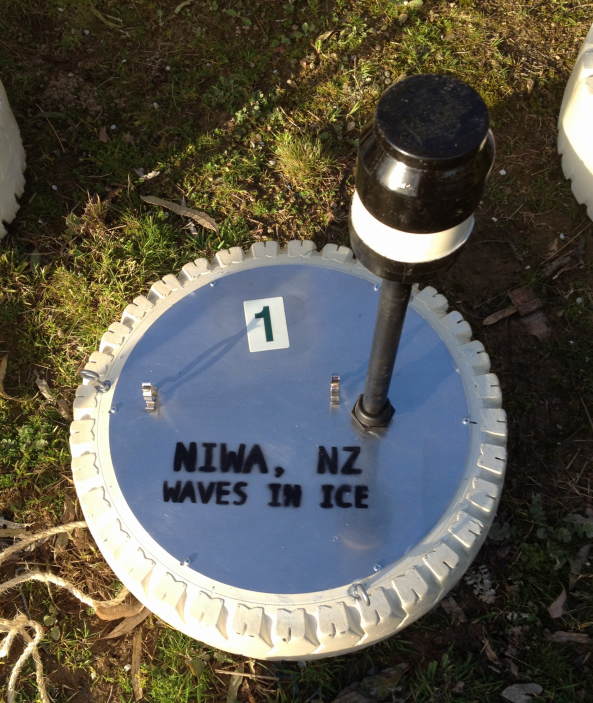
The 2012 buoy, a disc with a tyre around the rim.
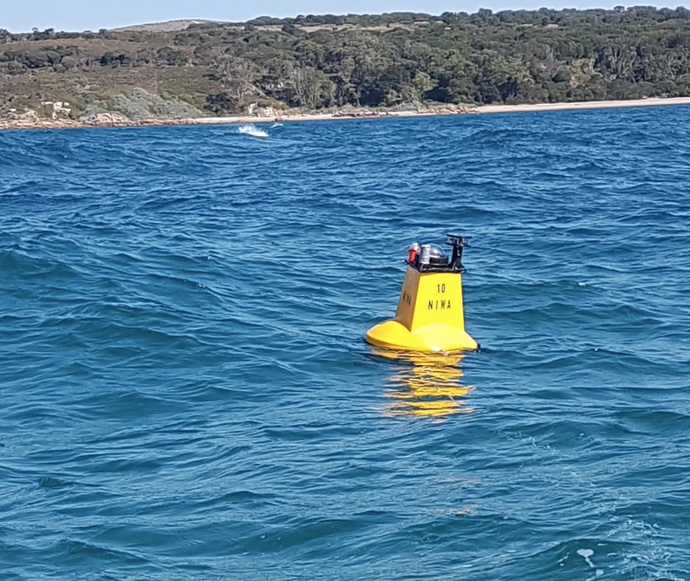
A floating hull in open water.
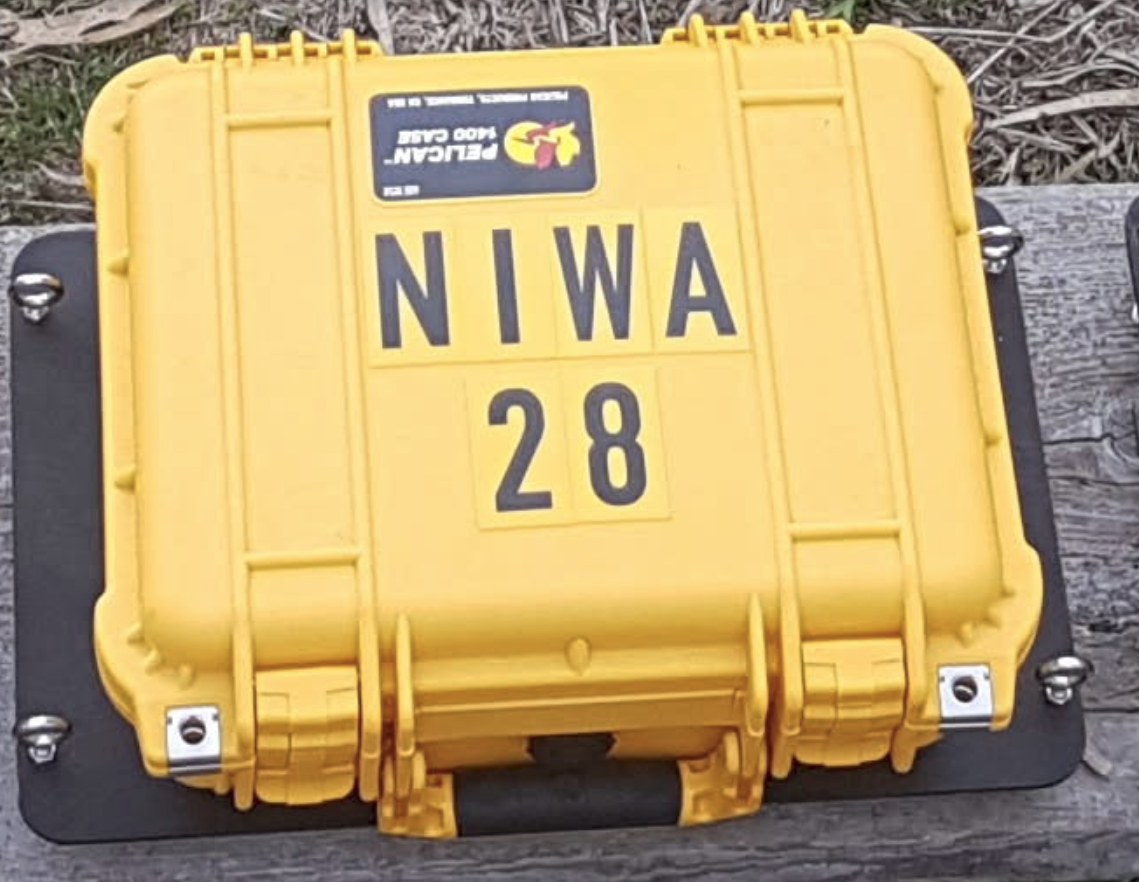
An ice-surface box, a Pelican case on a base plate.
The enclosure drives almost everything downstream: battery size, sensor mounting, what the antenna can see, and how the buoy behaves when the ice moves. WII6 is designed to fit the hulls that carried WII5, and the same rules apply.
Ice survival
The enclosure lives on or in sea ice for months: freeze-in, freeze-thaw cycles, ridging, and the loads when floes collide.
- Sealing under thermal cycling. Gaskets that work in a warm workshop can fail in a polar winter. Materials are chosen for low-temperature flexibility and the full assembly is cold-soaked before deployment.
- No external moving parts. Anything that hinges, slides or rotates can freeze open or shut.
- Drainage. The outer hull needs to shed water before it collects and freezes. The electronics compartment stays sealed, with drainage paths kept outside it.
Temperature
The enclosure has to cope with Antarctic winter temperatures and direct sun on a dark surface in spring. Wind increases heat loss from a warm enclosure. Battery chemistry and insulation are chosen for the expected temperatures and the current needed while the buoy is awake.
Heat from the electronics contributes to the internal temperature. The battery also needs to work after long periods asleep. Cold testing checks the assembled system. Desiccant and a small internal air volume help manage condensation as it warms up.
Weight
Weight matters three times: at deployment, where buoys go over the side by hand from ships, hovercraft and helicopters; on the ice, where a buoy too light blows around and one too heavy punches through; and in shipping, where every kilogram is multiplied by the fleet.
Staying put
A buoy on the surface has to stay where it was placed. Spikes on the underside lock it to the ice without penetrating so far that it cannot be recovered when the surface refreezes. The spike pattern and material are matched to the ice regime.
Antenna and sky
The Iridium and GNSS antennas need a clear view of the sky. The top is radio-transparent or carries an external antenna, and nothing on the surface shadows it or collects snow that would.
Forms
- An ice-surface box with spikes underneath.
- A floating hull with a weighted keel for the ice edge.
- A tethered variant for specific deployment geometries.
Talk to us about the site and the season and we will recommend the form. More drawings and photographs are being assembled for this page.